
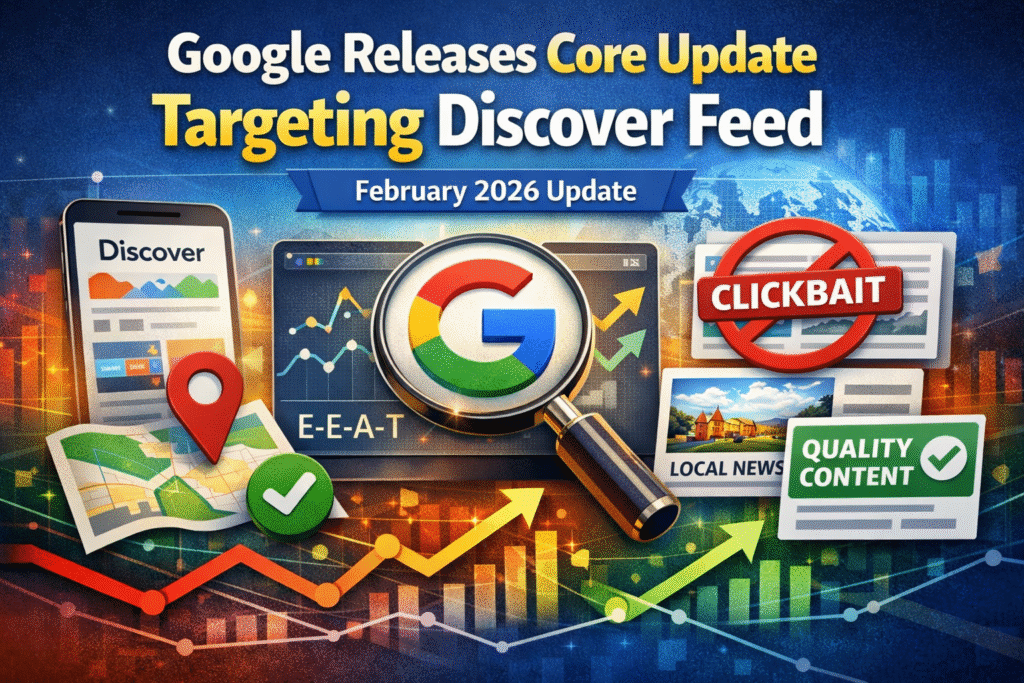
The digital landscape just shifted. Google has released a core update specifically targeting the Discover feed, marking a pivotal moment for publishers, content creators, and SEO professionals. This comprehensive guide unpacks everything you need to know about this update and how to adapt your content strategy for sustained success.
1. Introduction to Google Discover Core Update
In early 2026, Google rolled out a significant algorithmic update focused exclusively on its Discover feed. Unlike broad core updates that affect both Search and Discover simultaneously, this update represents Google’s first concentrated effort to refine content quality and relevance specifically within the Discover ecosystem.
This update signals Google’s commitment to enhancing user experience in Discover by promoting genuinely valuable content while demoting low-quality, clickbait, and manipulative content. For publishers who have built significant traffic streams from Discover, understanding this update isn’t optional—it’s essential for survival.
The timing of this update coincides with Google’s broader push toward more personalized, AI-driven content delivery. As Discover continues to grow as a traffic source for millions of websites, Google is taking decisive steps to ensure the content surfaced meets stringent quality standards.
2. What Is Google Discover Feed?
Google Discover is a personalized content feed that appears on the Google mobile app and the mobile homepage. Unlike traditional search, where users actively query information, Discover proactively serves content based on user interests, browsing history, and engagement patterns.
Key characteristics of Google Discover include:
Personalization at Scale: Discover uses machine learning to understand individual user preferences, serving content tailored to specific interests without requiring a search query.
Visual-First Design: The feed emphasizes large images, compelling headlines, and quick-scan content that captures attention in milliseconds.
Topic-Based Organization: Content is grouped by topics users have shown interest in, creating thematic consistency throughout the feed.
Mobile-Native Experience: Discover was built specifically for mobile consumption, with design elements optimized for smartphone screens and touch interactions.
No Keywords Required: Unlike traditional SEO, Discover doesn’t rely on keyword matching. Instead, it focuses on topical relevance and user interest alignment.
For publishers, Discover represents a massive opportunity. A single piece of content can reach millions of users within hours if it resonates with Discover’s algorithm. However, this traffic can be volatile, appearing suddenly and disappearing just as quickly—a characteristic that makes understanding algorithmic updates crucial.
3. Overview of the Latest Google Core Update Targeting Discover Feed
The 2026 Discover-focused core update introduced several fundamental changes to how content is evaluated, ranked, and surfaced within the feed. This wasn’t a minor tweak; it represents a comprehensive overhaul of quality signals.
Primary Update Characteristics:
The update rolled out over a two-week period, with most publishers noticing impacts within 3-5 days of the initial rollout. Unlike some updates that create immediate dramatic shifts, this update showed a pattern of gradual traffic changes, suggesting Google’s algorithm was reassessing content quality on an ongoing basis.
Also read this blog – SEO December Core Update: Preferred Sources & Social Data Explained
Scope and Impact: Early data indicates approximately 40% of publishers experienced significant traffic fluctuations—either gains or losses exceeding 20% of their baseline Discover traffic. This makes it one of the most impactful Discover-specific updates in the platform’s history.
Algorithmic Focus Areas: The update particularly emphasized three core areas: content expertise and authority (E-E-A-T), user engagement quality, and content freshness combined with evergreen value.
Geographic Variations: Publishers reported different impact levels across geographic regions, suggesting Google may be applying different quality thresholds or preference signals based on market maturity and user behavior patterns in different countries.
4. Why Google Released a Discover-Focused Core Update
Google’s decision to target Discover specifically stems from several converging factors that threatened the platform’s long-term viability and user satisfaction.
User Experience Degradation: Google’s internal metrics showed declining user satisfaction with Discover content. Users were encountering increasing amounts of sensationalized content, misleading headlines, and low-quality articles that failed to deliver on their promises. This erosion of trust threatened Discover’s position as a valuable content discovery tool.
Publisher Gaming: As Discover became a significant traffic source, some publishers developed strategies specifically to game the algorithm. These tactics included extreme headline optimization, thumbnail manipulation, and content structures designed purely for initial clicks rather than sustained value. Google needed to address these manipulative practices before they became systemic.
Content Quality Concerns: The proliferation of AI-generated content, thin articles with minimal original value, and content farms exploiting Discover’s reach necessitated stronger quality controls. Google needed algorithmic mechanisms to distinguish between genuinely valuable content and mass-produced, low-effort articles.
Business Sustainability: For Discover to remain viable as an ad platform and user engagement tool, Google needed to ensure content quality remained high. Declining content quality would drive users away, reducing engagement and ultimately harming Google’s business model.
Competitive Pressure: With platforms like TikTok and Instagram Reels competing for user attention with highly engaging short-form content, Google needed to ensure Discover offered comparable value. This required elevating content standards to compete effectively in the attention economy.
5. Key Changes in the Discover Feed Algorithm Update
Understanding the specific algorithmic shifts helps publishers adapt effectively. The update introduced several measurable changes to how content is evaluated and ranked.
Enhanced Quality Signals:
Google significantly strengthened its evaluation of content quality markers. The algorithm now places greater weight on comprehensive coverage of topics, factual accuracy, and original insights rather than superficial topic coverage. Content that merely aggregates information from other sources without adding unique perspective or analysis receives substantially lower priority.
Engagement Metrics Refinement:
The update recalibrated how engagement metrics influence ranking. Rather than rewarding simple click-through rates, the algorithm now emphasizes sustained engagement. Metrics like time on page, scroll depth, return visits, and social sharing behavior now carry more weight. This shift penalizes clickbait that generates initial clicks but fails to retain attention.
Visual Content Standards:
Image quality requirements have increased significantly. The algorithm now better detects low-resolution images, misleading thumbnails, and images that don’t accurately represent article content. Publishers using stock photos unrelated to their content or manipulated images designed to shock or mislead face ranking penalties.
Freshness Versus Evergreen Balance:
Google refined how it balances trending content with evergreen material. While Discover has always favored recent content, the algorithm now better identifies evergreen content that maintains relevance over time. Content that addresses timeless questions or provides lasting value can now continue appearing in Discover feeds long after publication, provided it remains accurate and useful.
Author Authority Recognition:
The update introduced stronger signals for recognizing and rewarding recognized experts. Content from established authorities in their fields receives preferential treatment, while content from unknown authors on complex topics faces higher quality thresholds. This change particularly affects health, finance, and legal content where expertise matters significantly.
Topical Coherence Evaluation:
Google’s algorithm now better evaluates whether content genuinely serves user interests or simply targets popular keywords. Content must demonstrate clear topical relevance to users’ established interest patterns. Publishers can no longer game the system by simply creating content around trending topics without genuine expertise or value-add.
6. How the Google Discover Core Update Affects Publishers
The impact on publishers varies dramatically based on content quality, audience engagement patterns, and historical performance in Discover.
Traffic Volatility Patterns:
Publishers accustomed to stable Discover traffic experienced new patterns of volatility. Even high-quality publishers saw day-to-day fluctuations increase as the algorithm became more responsive to real-time engagement signals and emerging content. This requires publishers to focus on consistent quality rather than relying on past performance.
Niche Authority Benefits:
Publishers with established authority in specific niches generally benefited from the update. Sites recognized as go-to sources for particular topics saw traffic increases as Google’s algorithm became better at identifying genuine expertise. This created opportunities for specialized publishers to compete against larger generalist sites.
Content Velocity Implications:
The update changed optimal publishing frequency strategies. Publishers producing high volumes of mediocre content saw traffic declines, while those publishing fewer but more comprehensive, well-researched pieces often gained traffic. This shift rewards quality over quantity, forcing publishers to reconsider content production approaches.
Monetization Impact:
For publishers relying heavily on Discover traffic for advertising revenue, the update created significant business implications. Those experiencing traffic declines faced immediate revenue impacts, while beneficiaries saw improved monetization opportunities. This volatility underscores the risk of over-reliance on any single traffic source.
Brand Recognition Amplification:
Publishers with strong brand recognition and direct traffic sources alongside Discover benefited from algorithmic preference for established, trusted sources. The update increased the importance of building brand equity beyond Discover, as brand signals now influence Discover rankings more heavily.
7. Impact on Website Traffic from Google Discover
Real-world data from the weeks following the update reveals specific traffic patterns that publishers should understand.
Immediate Traffic Shifts:
Within the first 72 hours of the update rollout, approximately 15% of publishers saw dramatic traffic changes—either gains or losses exceeding 50%. These extreme shifts typically affected sites with obvious quality issues or those previously employing aggressive optimization tactics.
Stabilization Patterns:
After the initial volatility, traffic patterns typically stabilized within 7-10 days at new baseline levels. Publishers who made rapid quality improvements during this window sometimes recovered lost traffic, suggesting the algorithm responds to quality changes relatively quickly.
Category-Specific Effects:
News publishers generally experienced less dramatic changes than evergreen content sites, suggesting Google applied different quality thresholds to time-sensitive news versus reference content. Entertainment and lifestyle categories saw particularly high volatility, likely due to prevalence of clickbait in these verticals.
Geographic Distribution:
Publishers noticed traffic changes varied by country. Content performing well in the United States might experience different patterns in European markets or Asian countries, indicating Google applies localized quality signals or user preference patterns.
Recovery Timelines:
Publishers implementing quality improvements typically needed 2-4 weeks to see traffic recovery, assuming changes genuinely addressed quality issues. This lag period reflects the time required for the algorithm to re-evaluate content and user engagement patterns to stabilize.
8. Content Types That Perform Better After the Discover Update
The algorithmic changes created clear winners in terms of content formats and approaches.
Long-Form Comprehensive Guides:
In-depth articles exceeding 2,000 words that thoroughly explore topics saw significant performance improvements. The algorithm now better recognizes and rewards comprehensive coverage that answers multiple related questions within a single resource. This shift reflects Google’s focus on content that genuinely serves user needs rather than forcing users to visit multiple sources.
Expert-Authored Content:
Articles clearly attributed to recognized experts with verifiable credentials in relevant fields gained substantial ranking advantages. Content featuring author bios, credentials, and links to additional expert content performed notably better than anonymous or poorly attributed content.
Original Research and Data:
Content featuring original research, unique data analysis, or proprietary insights gained significant traction. The algorithm appears to specifically identify and reward content that adds new information to the web rather than merely rephrasing existing content. Publishers conducting surveys, analyzing data sets, or providing unique industry insights benefited substantially.
Visual-Rich Storytelling:
Articles incorporating high-quality, original images, infographics, and visual elements saw improved performance. The algorithm rewards visual diversity and quality, particularly when images directly support and enhance written content rather than serving as mere decoration.
Problem-Solution Frameworks:
Content structured around identifying specific problems and providing actionable solutions performed exceptionally well. This format aligns with user intent in Discover, where users seek content that addresses their interests and challenges. Tactical, applicable advice outperformed theoretical or abstract content.
Personal Experience Narratives:
First-person content sharing genuine experiences, particularly in travel, lifestyle, and personal development categories, gained traction. The algorithm appears to value authenticity and unique perspective, making personal narratives from credible sources valuable in Discover feeds.
9. Role of E-E-A-T in Google Discover Ranking Changes
Experience, Expertise, Authoritativeness, and Trustworthiness (E-E-A-T) became central to Discover ranking in this update, though applied differently than in traditional search.
Experience Validation:
The “Experience” component—the newest addition to E-A-T—carries particular weight in Discover. Content demonstrating first-hand experience with subjects covered ranks significantly higher. This especially impacts review content, how-to guides, and personal narrative pieces. Google’s algorithm now better identifies markers of genuine experience, such as specific details, nuanced observations, and practical insights that only come from direct involvement.
Expertise Recognition:
Discover now more effectively evaluates author expertise through multiple signals. These include author credentials, previous content quality, topic consistency, and external recognition. Publishers must ensure expert authors are properly credited, with comprehensive bios and credentials clearly displayed.
Authoritativeness Signals:
Site-level and author-level authoritativeness significantly influence Discover rankings. The algorithm evaluates factors like backlink profiles, citations from other authoritative sources, media mentions, and social proof. Publishers can enhance authoritativeness through strategic content partnerships, guest contributions, and active participation in industry conversations.
Trustworthiness Indicators:
Trust signals became more influential in determining Discover visibility. These include technical factors like HTTPS implementation, clear ownership information, transparent editorial policies, and fact-checking processes. Sites with trust issues—whether from technical problems, unclear ownership, or past accuracy problems—face substantial ranking challenges.
YMYL Content Standards:
For Your Money or Your Life (YMYL) topics—health, finance, safety, and legal content—now face even stricter E-E-A-T requirements in Discover. Content in these categories without clear expert credentials or institutional backing struggles to gain visibility, regardless of other quality signals.
10. How Clickbait Content Is Affected by the Discover Core Update
The update specifically targeted clickbait tactics that had proliferated in Discover feeds, creating a difficult environment for manipulative content strategies.
Headline Manipulation Detection:
Google’s algorithm became significantly better at identifying misleading headlines that overpromise or misrepresent content. Headlines using curiosity gaps, extreme claims, or emotional manipulation face ranking penalties, especially when content fails to deliver on headline promises. The algorithm now compares headline claims against actual content delivery, penalizing significant disparities.
Thumbnail Misleading Practices:
Publishers using shocking, misleading, or unrelated thumbnail images experienced dramatic traffic drops. The algorithm now analyzes visual-text alignment, penalizing cases where images don’t accurately represent article content. This particularly affected publishers using emotionally manipulative images or unrelated stock photos to drive clicks.
Content Delivery Mismatch:
Articles that fail to deliver information promised in headlines or thumbnails face severe ranking penalties. The algorithm evaluates whether content substantively addresses the topic suggested by promotional elements. Publishers must ensure headlines and thumbnails accurately represent content rather than exaggerating or misrepresenting it.
Engagement Quality Versus Quantity:
The update shifted from rewarding high click-through rates to emphasizing engagement quality. Content generating clicks but minimal time-on-page or high bounce rates now performs poorly. This change specifically targets clickbait, which traditionally succeeded through initial clicks but failed to retain attention.
Sensationalism Penalties:
Content using excessive sensationalism, whether in headlines, images, or text, faces ranking challenges. The algorithm appears to identify and penalize emotional manipulation tactics, favoring balanced, fact-based presentations over hyperbolic claims.
11. Best SEO Practices to Optimize for Google Discover in 2026
Adapting to the new Discover landscape requires specific optimization strategies aligned with current algorithmic priorities.
Content Quality Fundamentals:
Prioritize comprehensive, well-researched content that thoroughly addresses topics from multiple angles. Invest in content depth rather than superficial coverage. Every piece should offer unique insights, original analysis, or valuable synthesis of existing information. Avoid thin content that merely rephrases information readily available elsewhere.
E-E-A-T Implementation:
Develop robust author profiles showcasing expertise and credentials. Create comprehensive author pages with detailed bios, credentials, publication history, and social proof. Ensure every article clearly attributes authorship and links to author profiles. For institutional content, prominently display organizational credentials, certifications, and recognition.
Visual Excellence:
Invest in high-quality, original images that directly support content. Large, clear images (minimum 1200px width) perform best. Ensure images accurately represent content rather than serving as clickbait. Use proper image optimization techniques, including descriptive file names, alt text, and structured data markup.
Technical Optimization:
Implement structured data markup, particularly Article and NewsArticle schemas. Ensure mobile optimization is flawless, as Discover is primarily a mobile experience. Maintain excellent page speed, aiming for Core Web Vitals that exceed minimum thresholds. Use HTTPS universally, and ensure all technical SEO fundamentals are addressed.
Content Freshness Strategy:
Maintain a consistent publishing schedule with regular content updates. Regularly refresh evergreen content with new information, updated statistics, and current examples. Consider implementing “last updated” dates to signal content freshness. Balance trending topics with timeless content that maintains long-term value.
Engagement Optimization:
Structure content for sustained engagement, using clear hierarchies, compelling subheadings, and scannable formatting. Incorporate multimedia elements that enhance rather than distract from content. Design content to encourage deep reading rather than quick scanning. Consider user journey and information architecture to keep readers engaged.
Topic Authority Building:
Focus on becoming recognized authorities in specific niches rather than covering everything superficially. Create content clusters around core topics, demonstrating deep expertise. Build topical authority through comprehensive coverage, consistent quality, and regular publication within defined subject areas.
Brand Development:
Invest in brand building beyond Discover. Develop direct traffic sources, email lists, and social followings. Strong brand signals increasingly influence Discover rankings, making brand investment crucial for long-term success.
12. How to Recover Discover Traffic After a Core Update
Publishers who experienced traffic declines can take specific steps to potentially recover lost visibility.
Comprehensive Content Audit:
Begin with a thorough audit of all content currently or previously appearing in Discover. Identify patterns in content that lost visibility—common topics, formats, authors, or quality issues. Compare underperforming content against current top performers to identify gaps. Use analytics tools to understand engagement patterns and identify content failing to meet quality thresholds.
Quality Gap Analysis:
Systematically evaluate content against E-E-A-T criteria. Assess whether content demonstrates genuine expertise, provides unique value, and maintains trustworthiness. Identify content with thin coverage, outdated information, or lack of authoritative sourcing. Prioritize improvements based on historical traffic value and topic importance.
Strategic Content Improvement:
Rather than making superficial changes, fundamentally improve content quality. Add original research, expert insights, and comprehensive coverage. Update statistics, replace weak sources with authoritative references, and enhance visual elements. Ensure improvements genuinely increase content value rather than simply changing content for algorithm sake.
Author Authority Enhancement:
Strengthen author profiles and credentials. Add detailed bios, professional certifications, and portfolio examples. For content lacking clear expertise, consider commissioning rewrites from recognized experts or adding expert contributions and quotes.
Technical Foundation Repair:
Address technical issues that might signal low quality to Google. Improve page speed, fix mobile usability problems, implement or correct structured data, and ensure HTTPS implementation. Technical problems can compound content quality issues, creating additional ranking barriers.
Engagement Signal Improvement:
Restructure content to encourage sustained engagement. Improve readability, add compelling subheadings, incorporate relevant multimedia, and enhance internal linking to related content. Design content experiences that keep users engaged rather than encouraging quick exits.
Patience and Monitoring:
After implementing improvements, allow 2-4 weeks for algorithmic re-evaluation. Monitor traffic patterns, engagement metrics, and Discover impressions. Avoid making constant changes during this period, as instability can confuse algorithmic assessment. Document changes and impacts to understand what drives recovery.
13. Google Discover vs Google Search Core Updates
Understanding how Discover updates differ from traditional Search updates helps publishers develop appropriate strategies.
Algorithmic Independence:
While Discover and Search share some quality signals, they operate as distinct algorithms with different priorities. Content ranking well in Search doesn’t automatically perform well in Discover, and vice versa. Discover prioritizes user interest alignment and engagement potential, while Search emphasizes query relevance and authoritative answering.
User Intent Differences:
Search responds to explicit user queries, while Discover anticipates interests based on behavior patterns. This fundamental difference means content optimization strategies must account for different user mindsets—active information seeking versus passive discovery.
Ranking Factor Weights:
Factors like backlinks, domain authority, and keyword optimization carry more weight in Search. Discover places greater emphasis on engagement metrics, visual quality, content freshness, and topical relevance to user interests. E-E-A-T matters in both, but manifests differently depending on the context.
Traffic Characteristics:
Search traffic tends to be more stable and predictable, while Discover traffic can be highly volatile. Discover can deliver massive traffic spikes when content gains traction, but traffic can disappear equally quickly. This volatility requires different business planning and revenue strategies.
Optimization Approaches:
Search optimization centers on keyword research, technical SEO, and authoritative linking. Discover optimization emphasizes visual appeal, headline optimization (without clickbait), content freshness, and engagement design. Both require quality content, but the tactical approaches differ significantly.
Update Impact Patterns:
Search core updates typically create more gradual, sustained ranking changes. Discover updates often produce more dramatic, immediate traffic shifts. Recovery strategies also differ, with Discover potentially offering faster recovery opportunities for publishers making genuine quality improvements.
14. Common Mistakes to Avoid After the Discover Feed Update
Publishers recovering from or adapting to the update should avoid several common missteps that can worsen performance.
Overreacting to Volatility:
Many publishers make constant content changes in response to daily traffic fluctuations. This creates instability that prevents clear assessment of what works. Instead, implement thoughtful changes and allow sufficient time for algorithmic re-evaluation before making additional modifications.
Abandoning Quality for Frequency:
Some publishers respond to traffic declines by increasing publishing volume, hoping quantity will compensate for quality issues. This typically backfires, as the algorithm specifically penalizes thin, low-quality content regardless of volume. Focus on fewer, higher-quality pieces rather than mass production.
Superficial Content Updates:
Simply changing publication dates, adding minimal new paragraphs, or making cosmetic modifications without substantive improvements rarely helps. The algorithm evaluates genuine content quality improvements, not superficial freshness signals. Meaningful updates require substantial content enhancement.
Ignoring E-E-A-T Signals:
Publishers often overlook the importance of properly showcasing expertise and authoritativeness. Failing to create detailed author profiles, clearly attribute content to experts, or demonstrate organizational credentials creates missed opportunities for algorithmic recognition.
Misunderstanding Engagement Metrics:
Some publishers optimize for wrong engagement signals, focusing on click-through rate rather than sustained engagement. The algorithm now rewards content that retains attention, not merely content that generates initial clicks. Design content for deep engagement rather than superficial interaction.
Neglecting Technical Foundations:
Publishers sometimes focus exclusively on content while ignoring technical issues. Poor mobile experience, slow page speeds, or missing structured data can undermine even excellent content. Ensure technical foundations support rather than hinder content performance.
Copying Competitors Blindly:
Attempting to replicate competitor content that performs well in Discover often fails because the algorithm values originality. Understanding why certain content succeeds and adapting those principles to unique content works better than direct imitation.
15. Tools to Monitor Google Discover Traffic Changes
Effective monitoring requires appropriate tools and methodologies to understand Discover performance.
Google Search Console:
Search Console’s Discover performance report provides the most authoritative data on Discover traffic. Monitor impressions, clicks, and click-through rates over time. Analyze which content appears in Discover, when it appears, and how long it maintains visibility. Compare performance before and after the update to identify patterns.
Google Analytics 4:
GA4 tracks Discover traffic as a distinct source, allowing detailed analysis of user behavior after arrival from Discover. Examine engagement metrics like average session duration, pages per session, and scroll depth specifically for Discover traffic. Compare Discover traffic engagement against other sources to assess quality.
Performance Tracking Tools:
Third-party tools like SEMrush, Ahrefs, and similar platforms now include Discover tracking features. These tools can help identify content trending in Discover, monitor competitor performance, and track overall visibility patterns. Use these for broader market understanding beyond your own properties.
Real User Monitoring:
Implement real user monitoring to track actual user experiences, particularly focusing on Core Web Vitals and engagement metrics. Tools like Google PageSpeed Insights, Chrome User Experience Report, and RUM solutions provide data on technical performance affecting Discover eligibility.
Custom Dashboards:
Create custom dashboards combining data from multiple sources to provide comprehensive Discover performance views. Include metrics like daily Discover traffic, engagement rates, content performance comparisons, and traffic trend analysis. Automated reporting helps identify issues quickly.
Content Performance Analysis:
Use content intelligence tools to analyze which content types, topics, and formats perform best in Discover. Track patterns over time to identify algorithmic preferences. Correlate content characteristics with performance to guide content strategy.
16. Future Expectations from Google Discover Algorithm Updates
Understanding likely future developments helps publishers prepare for ongoing algorithmic evolution.
Increased Personalization Sophistication:
Expect Google to enhance personalization capabilities, using more sophisticated AI to understand individual user preferences. This will likely make Discover feeds increasingly unique to individual users, requiring publishers to create content appealing to diverse interest profiles rather than optimizing for mass appeal.
AI-Generated Content Scrutiny:
As AI content generation becomes more prevalent, expect Google to develop better detection mechanisms and quality thresholds for AI-generated content. Publishers using AI tools must focus on substantial human review, editing, and value addition to meet quality standards.
Video and Multimedia Integration:
Discover will likely expand video content integration, competing more directly with platforms like TikTok and YouTube Shorts. Publishers should prepare for multimedia content formats gaining prominence alongside traditional articles.
Real-Time Content Evaluation:
Google may implement more real-time content quality assessment, reducing the lag between content publication and algorithmic evaluation. This could create more immediate traffic responses to content quality, both positive and negative.
Enhanced Expert Recognition:
Expect increasingly sophisticated systems for recognizing and validating expertise. Google may integrate more external signals, such as professional certifications, academic credentials, and industry recognition, into expertise assessment algorithms.
Stricter Quality Thresholds:
As Discover matures, quality requirements will likely continue increasing. What constitutes acceptable content today may fall below future thresholds. Publishers should continuously raise quality standards rather than maintaining static approaches.
Geographic and Cultural Customization:
Anticipate more sophisticated geographic and cultural content customization. Google may develop region-specific quality signals and preference patterns, requiring publishers to adapt content strategies for different markets.
17. Final Thoughts on the Google Discover Core Update
The 2026 Discover core update represents a maturation of Google’s content discovery platform, establishing clearer quality expectations and rewarding genuine value creation. For publishers, this update offers both challenges and opportunities.
Success in the New Discover Landscape:
Publishers who invest in genuine quality, expertise, and user value will find sustainable success in Discover. The algorithmic changes favor those committed to excellent content over those seeking algorithmic shortcuts. This creates a more level playing field where small publishers with genuine expertise can compete against larger entities.
Strategic Adaptation Requirements:
Adapting to the update requires fundamental strategy shifts, not just tactical adjustments. Publishers must embrace quality over quantity, expertise over generic coverage, and sustained engagement over superficial clicks. These changes align publisher incentives with user value, creating healthier long-term dynamics.
Long-Term Perspective:
Rather than viewing this update as a temporary disruption, treat it as a permanent shift in how Discover evaluates content. Build strategies around enduring quality principles rather than attempting to game current algorithmic specifics. Focus on creating genuinely valuable content that serves user interests regardless of algorithm changes.
Diversification Imperative:
The update underscores the importance of traffic diversification. Publishers overly dependent on Discover face substantial business risk from algorithmic volatility. Develop multiple traffic sources, including direct traffic, email, social, and traditional search, to create resilience against platform-specific changes.
Continuous Improvement Culture:
Success in Discover requires ongoing quality improvement rather than one-time optimization. Establish content review processes, regularly update existing content, continuously enhance E-E-A-T signals, and stay informed about algorithmic developments. Make quality improvement a continuous organizational priority.
The Google Discover core update ultimately benefits users by improving content quality and publisher transparency. For publishers willing to invest in genuine quality and expertise, the update creates opportunities to build sustainable traffic and establish authoritative positions in their niches. Success requires commitment to excellence, strategic adaptation, and ongoing quality focus—but the rewards justify the investment.
As Discover continues evolving, publishers who prioritize user value, demonstrate genuine expertise, and maintain technical excellence will find themselves well-positioned for sustained success in this increasingly important traffic channel.